
Lawyer Burnout Epidemic: Billable Hours & Burnout Cycles
Lawyers face burnout at alarming rates.
The pressure to meet high billable hours, manage demanding clients, and maintain perfection in every detail takes a heavy toll. Many attorneys push through exhaustion until their health, relationships, and performance suffer.
The legal industry rewards long hours and constant availability, making it hard to step back.
Burnout in law is a predictable result of relentless workloads and a culture that values output over well-being. Recovery requires more than vacation days or quick fixes. It means changing habits, setting boundaries, and rethinking how success looks in a legal career.
This guide explains why burnout happens in law, what to watch for, and how to break the cycle for good.
Why Lawyers Burn Out
Several factors combine to create high burnout risk in law.
Billable hour targets top the list.
Most firms set annual goals that require long days and nights. Every hour must be tracked, billed, and justified. This constant pressure leads to chronic stress.
Perfectionism drives many lawyers. The fear of mistakes, missed details, or unhappy clients keeps anxiety high.
High achievers often set unrealistic standards for themselves and struggle to delegate.
Client demands rarely pause. Clients expect quick responses, flawless work, and around-the-clock access.
Many attorneys feel they cannot say no, even when overwhelmed.
Firm culture matters, too. Some firms reward those who sacrifice personal time and health for the job. Others lack systems to monitor or support the attorney's well-being.
Over time, these pressures create a cycle of exhaustion and disconnection.
The Billable Hour Trap
Billable hours shape nearly every aspect of legal work.
Meeting targets often means sacrificing sleep, exercise, and family time. Lawyers learn to measure value by hours billed, not by results or impact.
This system encourages overwork and discourages rest.
Many attorneys skip breaks, work through illness, or take calls on weekends to stay on track. The fear of falling behind pushes them to keep going, even when the body and mind need a break.
Tracking every minute adds mental strain
Lawyers must justify the time spent on every task, which increases anxiety and reduces focus. The billable hour model leaves little space for reflection, learning, or creative problem-solving.
Some firms now experiment with value-based billing or flexible targets.
These changes help, but most lawyers still feel stuck in the billable hour trap.
Perfectionism and Client Demands
Law attracts high achievers who pride themselves on accuracy and thoroughness.
Perfectionism can help lawyers avoid errors, but it also fuels burnout. Many attorneys struggle to delegate, fearing others will not meet their standards.
Client expectations add another layer of pressure. Clients want fast answers, detailed updates, and perfect outcomes. When every mistake feels catastrophic, stress builds.
Lawyers often work late to double-check every detail, answer every email, and anticipate every possible risk. This cycle of perfectionism and client pressure leaves little room for rest or recovery.
Over time, even the most resilient lawyers reach a breaking point.
Solutions for Lawyers and Law Firms
Burnout recovery in law requires both individual and organizational change.
Lawyers can start by setting clearer boundaries.
Block time for deep work and protect it from interruptions. Let clients and colleagues know when you are available and when you are not.
Prioritize tasks by urgency and impact. Not every request needs an immediate response. Learn to delegate routine work and trust your team. Saying no to low-value tasks creates space for meaningful work and recovery.
Firms can help by tracking workloads and monitoring attorney well-being. Offer flexible work arrangements, mental health support, and regular check-ins. Value results and client satisfaction, not just hours billed.
Peer support matters. Lawyers benefit from sharing experiences with colleagues who understand the pressures of the job. Mentorship, coaching, or peer groups provide fresh perspectives and practical advice.
Recovery requires intention, not perfection.
Industry Insights and Practical Steps
The legal industry now recognizes burnout as a significant risk.
Surveys from the American Bar Association and other groups show high rates of anxiety, depression, and substance use among lawyers. Many firms now offer wellness programs, but participation remains low due to stigma or lack of time.
Practical steps for lawyers include:
Schedule non-negotiable downtime each week.
Use technology to automate routine tasks and reduce manual workload.
Seek training on time management and delegation.
Set clear expectations with clients about response times and boundaries.
Participate in firm wellness initiatives or start your own peer support group.
Firms that address burnout see lower turnover, higher morale, and better client results.
Recovery is possible with the right support and a willingness to change.
Career Pivots After Burnout: Finding Aligned Work
FAQ
Why are lawyers at such high risk for burnout?
The combination of billable hour targets, perfectionism, and client pressures creates chronic stress.
Law firm culture often rewards overwork and discourages rest.
Can firms really change the billable hour culture?
Some firms now use value-based billing or flexible targets.
Change is possible, but it requires leadership commitment and a focus on well-being, not just profit.
What can I do if I feel burned out but cannot reduce my hours?
Start by setting boundaries where you can.
Delegate, prioritize, and protect personal time. Seek support from peers or mental health professionals.
How do I talk to my firm about burnout?
Use clear, factual language. Focus on how burnout affects your work and the firm’s results.
Suggest practical solutions or ask about available resources.
Are there resources specifically for lawyers facing burnout?
Yes.
The American Bar Association offers mental health resources, and many local bar associations run support programs. Peer groups and coaching can also help.
Joining a peer group or working with a coach can also provide valuable support.
Conclusion
Burnout in law is common, but it is not inevitable.
Billable hours, perfectionism, and client demands drive the cycle, but change is possible. Set boundaries, seek support, and push for healthier firm practices.
Progress comes from making intentional choices, not from doing everything perfectly.
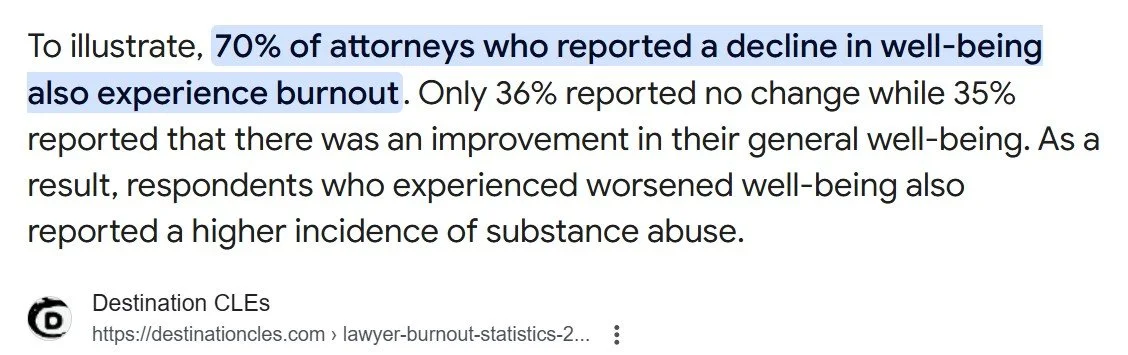
Up to 70% of lawyers will suffer from burnout