
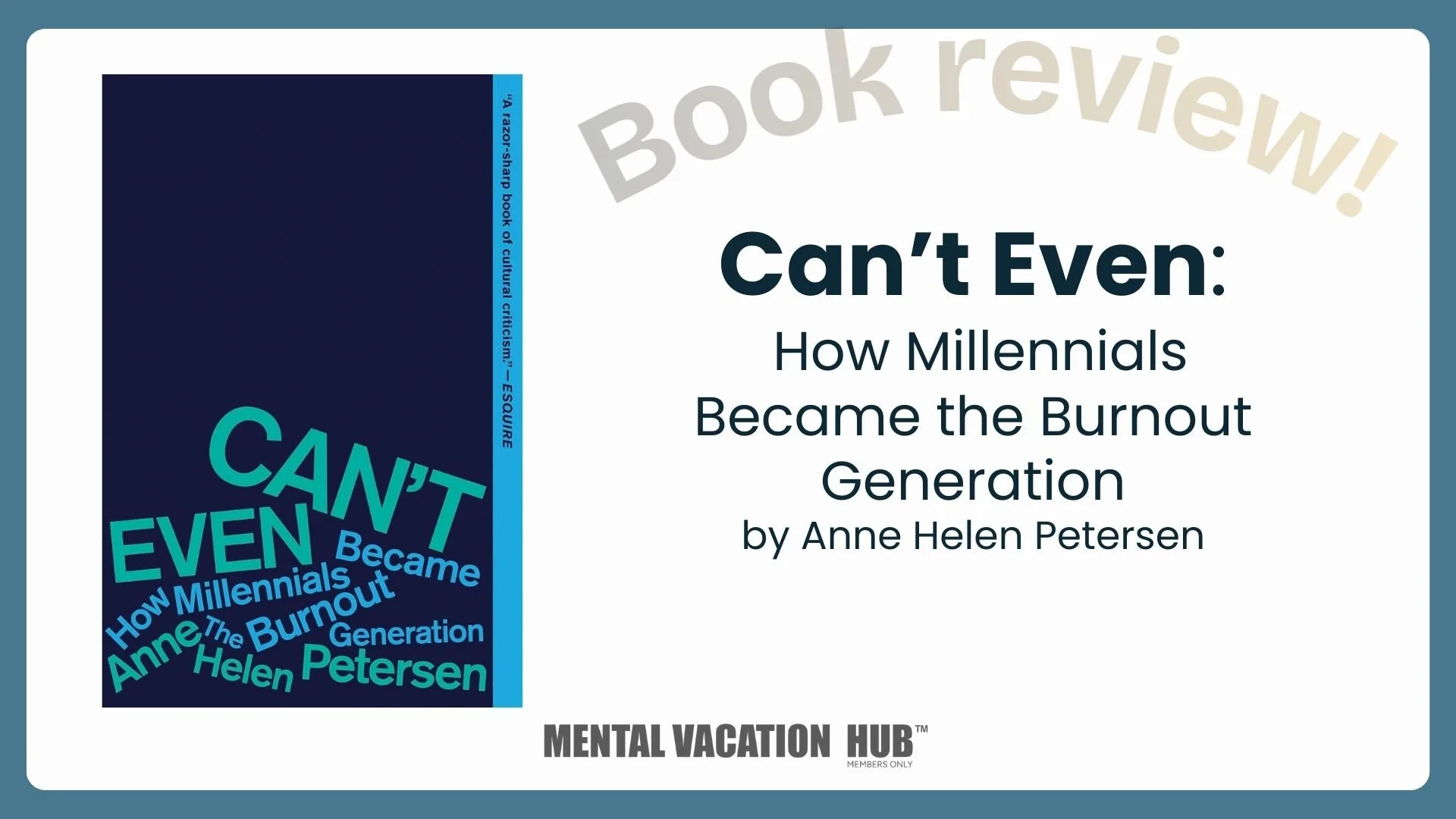
Book Review of “Can’t Even: How Millennials Became the Burnout Generation”
Millennials have been called the burnout generation, and Anne Helen Petersen’s Can’t Even became both a rallying cry and a mirror for millions feeling exhausted by modern life.
The book, which expanded on her viral BuzzFeed essay, dives into the lived experience of millennials who juggle work, side hustles, student loans, and the endless pressure to optimize every moment.
Petersen’s voice is sharp, empathetic, and deeply researched, making this book a must-read for anyone who has ever felt “can’t even” about the demands of adulthood.
But as much as the book nails the millennial mood, it also raises an important question: Is burnout really unique to one generation, or is it a broader epidemic that stretches across age, status, and career stage?
A Side-Note: Who’s Who?
A little overview for us who are not familiar with the following terms.
Millennials (Generation Y):
Born: 1981–1996 (roughly ages 29–44 in 2025)
Grew up with the internet, social media, and smartphones
Value flexibility, experiences, and work-life balance
Generation X (Gen X):
Born: 1965–1980 (roughly ages 45–60 in 2025)
Grew up before the internet, adapted to technology as adults
Value independence, pragmatism, and work stability
Baby Boomers:
Born: 1946–1964 (roughly ages 61–79 in 2025)
Grew up after World War II, before digital technology
Value hard work, loyalty, and traditional career paths
The Premise: Burnout as a Millennial Condition
Anne Helen Petersen’s Can’t Even: How Millennials Became the Burnout Generation made waves when it launched, quickly becoming a key reference for anyone who feels stretched thin by modern life.
Petersen, drawing on her BuzzFeed reporting and academic background, explores why millennials are so burned out, connecting personal stories to big-picture social and economic trends. Her research is sharp, her tone is relatable, and her message resonates with anyone who has ever felt overwhelmed by the endless demands of adulthood.
Yet, while the book is a powerful look at millennial exhaustion, it also invites a broader question: Is burnout only a millennial issue, or is it a crisis that impacts people at every life stage?
The Premise: Burnout as a Millennial Experience
Petersen’s story starts with a simple confession.
She struggles to complete basic life tasks, like mailing a letter or booking a dentist appointment. She calls this “errand paralysis” and frames it as a symptom of a deeper problem. Millennials, she argues, have been shaped by economic downturns, the rise of gig work, student debt, and a culture that idolizes hustle and productivity above all else.
Her research traces how the collapse of stable jobs, the expectation to always be “on,” and the pressure to build a personal brand have created a generation that is always tired and anxious. Petersen’s thesis is that burnout is not about being lazy or inefficient.
It is the result of living in a world where rest feels impossible and where every moment is measured against impossible standards.
What “Can’t Even” Gets Right
Petersen’s greatest strength is her ability to connect individual struggles with larger social forces.
She draws on interviews, academic studies, and her own experiences to show that millennial burnout is not a personal failure. It is the logical outcome of decades of policy decisions and cultural shifts.
The book shines when it describes the details of daily burnout.
Petersen interviews teachers who buy classroom supplies with their own money, freelancers who never know when their next job will come, and parents who feel guilty for not being able to “do it all.” These stories are raw and relatable, showing readers that they are not alone in their exhaustion.
She also explores how work has invaded every aspect of life.
The “always-on” mentality, fueled by email, Slack, and side hustles, blurs the boundaries between work and rest. Petersen’s take on social media is especially sharp.
She explains how it turns every achievement into public content and every failure into something to be judged, making it even harder to disconnect.
Where the Book Falls Short
Despite its strengths, “Can’t Even” has a significant blind spot.
Petersen frames burnout as a uniquely millennial experience, but people of all ages face chronic stress and exhaustion. Executives, Gen Xers, and Baby Boomers deal with burnout too, often in silence. By focusing so narrowly on millennials, the book misses the broader cultural and economic forces that affect everyone.
Executives, for example, may have more resources than millennials, but the pressures they face are just as intense. High-achievers in leadership roles are expected to be available at all hours, make high-stakes decisions, and carry the emotional weight of entire organizations.
Many older professionals experience burnout without disclosing it, either because they fear stigma or because they have accepted suffering as part of the job.
Read more about it: How High Achievers Hide Burnout (and Why No One Notices).
Millennials vs. Executives: Similarities and Differences
Petersen’s focus on millennials is valuable for highlighting the unique challenges of this generation: gig economy instability, student debt, and the pressure to self-brand.
For millennials, burnout often comes from a feeling of powerlessness. Upward mobility seems out of reach, and the safety nets of earlier generations have eroded.
Executives and older professionals often experience burnout from relentless responsibility. They may have more control over their schedules, but expectations are relentless. The pressure to perform, lead, and support others makes it hard to admit vulnerability or ask for help.
Despite these differences, the symptoms are similar across generations: emotional exhaustion, cynicism, and feeling unaccomplished.
Both groups suffer when rest is seen as weakness and productivity is the only measure of worth.
Social Media, Technology, and Burnout
Petersen’s analysis of technology is especially insightful.
Millennials live their entire adult lives online. Social media blurs the line between work and leisure, turning every moment into something that can be measured and compared. The constant need to be visible and responsive amplifies stress, making it even harder to rest.
Executives and older professionals are not immune. The expectation to be always available, whether by email, Slack, or Zoom, erases boundaries between office and home.
Technology, meant to make life easier, often makes it harder to escape burnout.
Parenting and Burnout: The Missing Conversation
Petersen touches on parenting, but the book’s focus on millennials means that the unique challenges faced by working parents, especially those in leadership roles, are not fully explored.
Burnout for parents is not just about work. It is about the emotional labor of caring for children, managing a household, and supporting a partner, all while trying to maintain a career.
Older parents and executives often face a double bind: work demands do not lessen, but the needs at home increase. The result is a constant juggling act, with little time for self-care or recovery.
This is a crucial piece of the burnout puzzle that deserves more attention.
What the Book Means for Gen Z and Beyond
Although “Can’t Even” is about millennials, its insights apply to Gen Z and future generations.
The pressures described in the book - economic instability, technological overload, and the erosion of boundaries - are not going away. Gen Z faces its own challenges, including climate anxiety and the ongoing impact of the pandemic.
Petersen’s call to recognize burnout as a systemic problem, not just a personal failing, is more important than ever.
Her suggestions for stronger social safety nets, workplace reforms, and a redefinition of success are relevant for everyone.
Final Thoughts: Who Should Read “Can’t Even”?
“Can’t Even” is a powerful book for anyone who feels overwhelmed by modern life.
Millennials will find validation and solidarity. Gen Z can use it as a roadmap for naming and resisting burnout. Executives and older professionals may see their own struggles reflected, even if the book does not speak directly to them.
The book’s greatest strength is its honesty.
Petersen does not offer quick fixes. Instead, she calls for systemic change and collective action. Readers should be aware of the book’s generational blind spots. Burnout is not new, and it is not limited to millennials.
By expanding the conversation to include executives, parents, and older professionals, we can better understand the full scope of burnout and find more inclusive solutions.
FAQ
Is “Can’t Even” only for millennials?
No, the book focuses on millennials, but anyone experiencing burnout will find relatable stories. Many of the workplace pressures and cultural shifts Petersen describes affect Gen Z, Gen X, and Boomers as well.
Does the book offer any solutions to burnout?
Petersen argues for systemic change over individual fixes. She suggests policy reforms, workplace changes, and a cultural shift away from constant productivity. The book does not give quick personal hacks but encourages readers to rethink what “success” means and to push for collective action.
What are the main themes of “Can’t Even”?
The book explores how economic instability, the gig economy, student debt, and social media have created a generation that feels constantly exhausted. It also looks at how work culture and technology have blurred the line between work and rest.
Is “Can’t Even” well-researched?
Yes, Petersen draws from academic studies, interviews, and her own reporting. She builds her arguments on both data and lived experience, making the book both credible and engaging.
How does “Can’t Even” compare burnout among millennials and executives?
The book’s focus is on millennials, but the core symptoms of burnout - emotional exhaustion, cynicism, and feeling unaccomplished - are similar for executives and older professionals. The main difference is the source of pressure: millennials face instability and lack of control, while executives deal with relentless responsibility and high expectations.
What does the book miss or overlook?
It underplays the experiences of older workers, high-achieving executives, and parents juggling multiple roles. Burnout is not unique to millennials, and a more inclusive approach would help broaden the conversation.
Why do people relate so strongly to “Can’t Even”?
Readers see their own struggles in the book’s stories. The combination of personal anecdotes and social critique helps people feel less alone and validates their exhaustion.
Is “Can’t Even” a good book for Gen Z?
Yes, many of the pressures Petersen describes are now even more intense for Gen Z. The book helps younger readers understand the roots of burnout and gives language to their experiences.
Does Anne Helen Petersen blame millennials for their burnout?
No, she is clear that burnout is not a personal failing. She places responsibility on systemic forces like economic policy, workplace culture, and technology.