Healthy Body, Happy Body: Sleep as the Engine of Executive Recovery
Sleep is rarely treated with the respect it deserves.
Many executives speak about sleep as if it were a negotiable expense, a soft preference, or an indulgence reserved for weekends. The pages you shared take a firmer position. Sleep has a direct bearing upon both our physical and mental health, and rest is essential for defining our psychological well-being.
This is not sentimental advice.
It is a practical warning. When sleep is insufficient, the body loses one of its most reliable repair mechanisms. When sleep is routinely ignored, the mind pays a price in clarity, patience, and judgment.
The idea of ignoring sleep to chase our daydreams is now getting dangerous, especially for people whose work depends on sustained attention and stable decision-making.

Sleep is nature’s repair system
Rest is nature’s way of repairing our physical structure.
Sleep is a maintenance, not motivation. Executives understand maintenance. You do not postpone maintenance on critical infrastructure without expecting failures.
Sleep performs repair work that cannot be outsourced. You can delegate tasks, hire support, and buy tools, but you cannot purchase a replacement nervous system. In burnout recovery, this reality becomes unavoidable. When the system is strained, sleep is not a lifestyle choice.
Sleep becomes the foundation that makes every other intervention more effective.
The cost of insufficient sleep is not abstract
The pages link insufficient sleep to lifestyle diseases like diabetes, obesity, heart diseases, reduced immunity, and reduced life expectancy.
That list is not included to frighten the reader. It is included to correct a cultural distortion that treats sleep loss as a badge of honor.
Executives often tolerate sleep deprivation because it appears to produce short-term output. The trade is deceptive. The body can borrow energy for a while, but the interest accumulates. Reduced immunity shows up as frequent illness and slow recovery.
Cardiometabolic strain shows up as fatigue, inflammation, and unstable mood. Reduced life expectancy is not a dramatic phrase. It is a measurable outcome associated with long-term deprivation.
Sleep deprivation is quickly becoming a silent public health crisis. The phrase “silent” is accurate because the damage often accumulates without a single dramatic moment. Many people adapt to being tired and mistake adaptation for resilience. They continue to function, but the quality of their functioning declines.
Their baseline becomes smaller, and their recovery becomes slower.
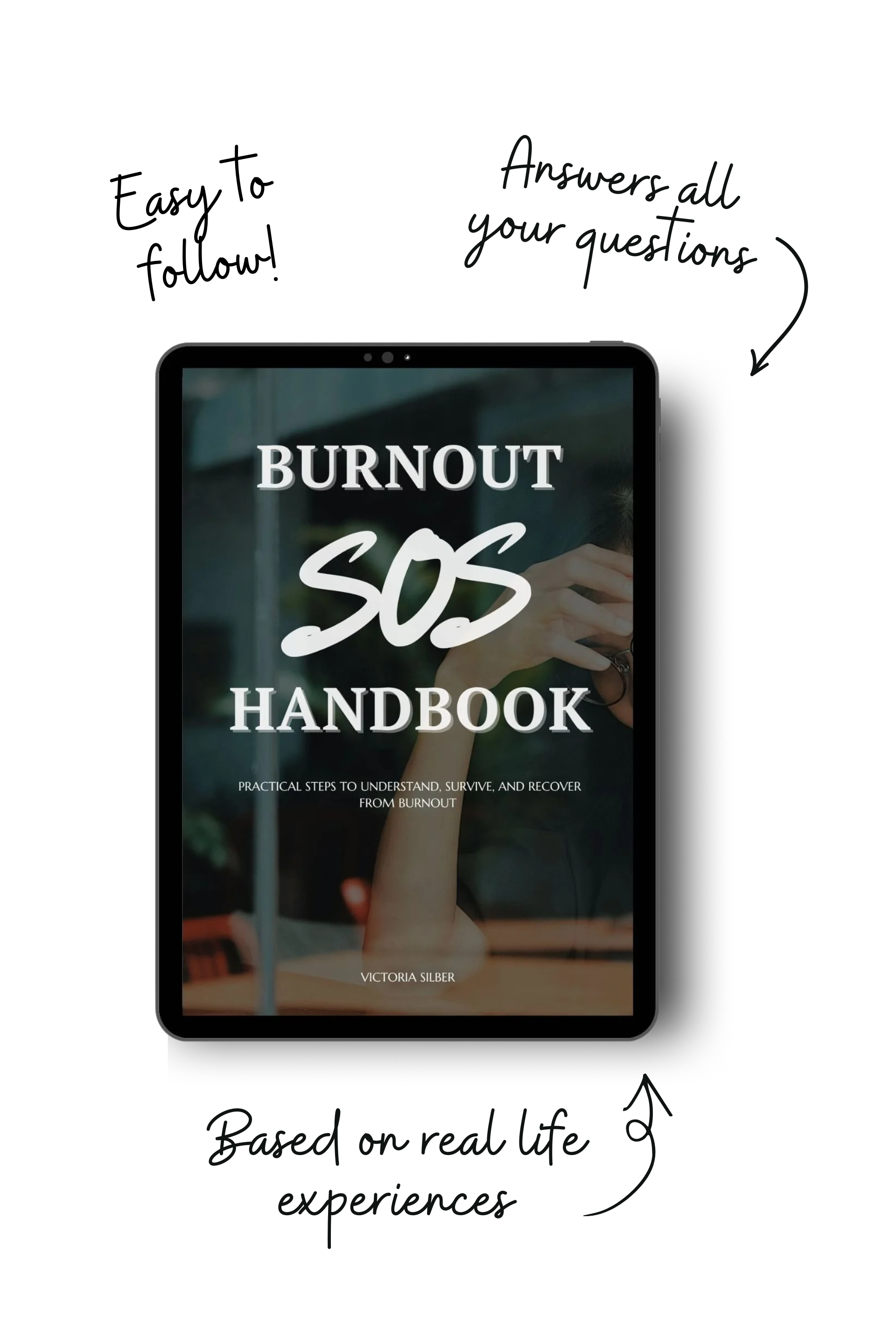
Burnout SOS Handbook: Practical steps to understand, survive, and recover from your burnout. Easy to follow - just right for a brain-fogged head. Start your healing today!
Burnout makes sleep non-negotiable
Burnout is a whole-system condition that affects cognition, emotional regulation, and physical capacity.
As burnout progresses, tolerance for disruption decreases. Minor stressors are experienced as disproportionate demands, cognitive flexibility declines, and physiological resilience weakens.
Within this context, sleep should not be treated as a lifestyle preference or wellness trend. It is the primary mechanism for reducing physiological stress and stabilizing emotional function. When sleep is insufficient, even well-designed strategies become difficult to sustain.
Nutrition degrades, movement becomes inconsistent, relationships require more effort, and work carries unnecessary weight.
Sleep is a non-negotiable biological requirement. Because leadership is enacted through cognitive clarity, emotional regulation, and physical presence, the condition of the body directly shapes the quality of leadership itself.
Sound sleep is built through simple practices
Unless you have reached the stage that requires medical intervention, the tricks to a sound sleep are quite simple.
Medical issues require medical support. Everyday sleep degradation often responds to everyday structure.
The practices listed in the pages are not complicated. They are designed to help the body relax and maintain the body clock to facilitate sound sleep.
Maintain a regular sleep-wake schedule
A regular schedule stabilizes the body clock.
When the body clock is stable, sleepiness arrives more naturally. When sleepiness arrives naturally, you stop negotiating with yourself at night.
Executives often resist schedules because schedules feel restrictive. But honestly, a sleep schedule is not a cage; it is a stabilizer.
It reduces friction and preserves mental energy for decisions that matter.
Sleep when you are exhausted
Sleep when you are exhausted to avoid tossing and turning.
The bed should not become a place of struggle. If you lie down without sleep pressure, the mind starts working. It reviews problems, replays conversations, and rehearses tomorrow.
A better approach is to build a short wind-down routine and wait for genuine sleepiness. When sleepiness is present, the transition becomes smoother.
When the transition is smooth, the brain learns that bedtime is safe.
Engage in mindfulness before bedtime
It is recommended to practice mindfulness through exercises like knitting, painting, or reading.
The common thread is gentle attention. These activities are not demanding, but they are absorbing enough to reduce rumination.
For executives, the best pre-sleep activity is often something that feels slightly old-fashioned. A paper book, a simple craft, or quiet writing can be more effective than digital entertainment.
Avoid chemical foods and drinks
Avoid chemical foods and drinks that contain caffeine, alcohol, and nicotine.
Substances that alter arousal and mood can disrupt sleep architecture.
A practical executive rule is simple: protect the second half of your day from stimulants and sedatives. Caffeine late in the day can delay sleep onset. Alcohol can fragment sleep and reduce deep recovery.
Nicotine can increase arousal and make rest lighter.
Make your bedroom a comfortable sleep environment
Make the bedroom a comfortable sleep environment.
Comfort is not luxury; it is a cue. The brain associates environments with states.
A bedroom that contains work materials, bright light, and constant notifications trains the brain to stay alert. A bedroom that is calm, dim, and predictable trains the brain to rest.
Avoid thinking of issues that give rise to anxiety
Avoid thinking of issues that give rise to anxiety.
This does not mean you should suppress reality. It means you should not schedule problem-solving at the moment your nervous system needs to shut down.
A practical method is a short “worry capture” ritual. Write down the issue in one sentence. Write down the next action in one sentence. Close the notebook and return to your wind-down activity.
The mind relaxes when it trusts that the issue is stored.
Avoid looking at your phone screen just before sleeping
This advice is already decade(s) lone: avoid the phone screen just before sleeping.
Even though we all know that screens increase stimulation and invite emotional input, we keep harming ourselves.
Executives often use the phone as a sedative. The result is usually the opposite. The mind becomes more alert, more reactive, and more restless.
A phone-free buffer before bed protects the transition into sleep.
The body cannot be replaced
No one can adopt your body pain and disease.
Medical advancement and money can only subdue illness and pain, and they can prolong life, but the agony of illness and its unhappiness are yours.
Family and friends can sympathize and provide moral support, but none of them can replace your body with their healthy body. Fighting an illness is always a lonely and unhappy battle.
Executives often carry responsibility for teams, budgets, and outcomes. That responsibility can become a justification for self-neglect. The pages reverse that logic. Your body is the one asset that cannot be substituted. If you lose it, you lose the platform from which everything else is built.
Sleep is one of the most direct ways to honor that reality; it is the condition that makes ambition sustainable.
A simple executive plan for the next seven nights
This is a short plan designed for educated, busy people who want structure without drama.
Choose a consistent wake time for seven days.
Create a twenty-minute wind-down routine that includes reading or quiet writing.
Remove the phone from the bed and keep it across the room.
Stop caffeine after lunch and avoid alcohol on work nights.
Write down one worry and one next action before turning off the light.
This plan is intentionally modest. The goal is not to win sleep. The goal is to restore the body clock and reduce nighttime friction.
FAQ
Why does sleep have such a strong effect on mental health?
Sleep supports emotional regulation, stress tolerance, and cognitive clarity. When sleep is insufficient, the brain becomes more reactive and less resilient.
What is the most important habit for better sleep during burnout?
A consistent sleep-wake schedule is usually the highest leverage habit. It stabilizes the body clock and reduces the struggle at bedtime.
What should I do when anxiety keeps me awake at night?
Use a short worry capture ritual before bed. Write the issue and the next action, then return to a calm wind-down activity.
Why should I avoid using my phone screen before sleeping?
Phone use increases stimulation and invites emotional input. A screen-free buffer protects the transition into sleep and supports deeper rest.
When should I seek medical help for sleep problems?
Seek medical support when sleep issues are severe, persistent, or accompanied by symptoms that suggest a medical condition. Professional guidance is appropriate when simple habits do not improve sleep.
Harvard Health Publishing: “How sleep deprivation can harm your health”
Learn More About Burnout Recovery