The Fun Habit: Why Fun Is a Burnout Recovery Skill
Executives rarely describe their difficulty as a lack of enjoyment.
They point instead to structural constraints: insufficient sleep, excessive meetings, compressed timelines, underperforming teams, and strategic ambiguity. These assessments are generally accurate and worth addressing.
Enjoyment is typically categorized as discretionary and treated as peripheral to serious work. It is often associated with indulgence rather than capacity.
What is frequently missed is that burnout affects more than energy or efficiency. It degrades vitality.
When vitality declines, recovery efforts tend to narrow into optimization efforts: supplements, routines, productivity systems, and therapeutic exercises. These interventions can be useful, but they do not, on their own, restore a sense of aliveness.
The material you referenced advances a direct claim. Many professionals are chronically deprived of activities that generate intrinsic engagement. In place of direct participation, they rely on passive consumption of other people’s experiences and treat that consumption as rest.
This article examines that claim in practical terms and explains how to incorporate it into executive burnout recovery without turning personal life into another performance-managed initiative.

Fun is not a reward. It is a fundamental good.
One of the most important lines on the page is simple: fun is, or should be, one of the fundamental goods available to all of us.
That matters because most high performers treat fun like a bonus feature.
After the deadline
After the launch
After the kids are older
After the next quarter
After the nervous system “calms down”
Burnout recovery does not work well with “after.”
When the nervous system remains oriented toward survival, it requires credible signals of safety.
Experiences that generate genuine enjoyment provide one of the most direct and effective signals. This is not about performative leisure or obligation-driven hobbies, nor about recovery that occurs only after collapse.
It refers to experiences that produce a measurable reduction in physiological tension and allow the system to downshift.
Fun is a biological intervention
Laughter and good humor reduce anxiety, decrease stress, enhance self-esteem, and increase self-motivation.
It also calls out physical effects: improved respiration and circulation, lower pulse and blood pressure, and endorphin release.
This is not “positive thinking.” This is physiology.
If you are in late-stage burnout, your system often cannot access motivation through discipline anymore. Discipline becomes another stressor.
Fun can become a back door.
It gives your brain a reason to re-engage with life without demanding performance first.
Why high performers become fun-starved
There is also a cultural trap: in a society that prizes productivity above all, fun becomes a “nice to have.”
So it gets pushed into:
Once-a-year vacations
Rare weekends
A future version of life that never arrives
Day by day, people give most waking hours to work and then become resentful of their to-do lists.
It is often the first honest signal that the current operating system is not sustainable.
And then something even stranger happens: instead of choosing their own adventure, people live vicariously through “goofy outliers” online.
You watch. You scroll. You borrow someone else’s vitality.
Unfortunately, it trains your brain to associate fun with spectatorship instead of participation.
The executive problem: fun feels unsafe
A lot of burnout advice fails because it assumes the person can simply “relax.”
Many executives cannot, because their nervous system has learned that:
Letting go means losing control
Play means vulnerability
Joy means the next crash will hurt more
So fun becomes suspicious.
If that is you, the goal is not to force big fun, but to rebuild trust with your system.
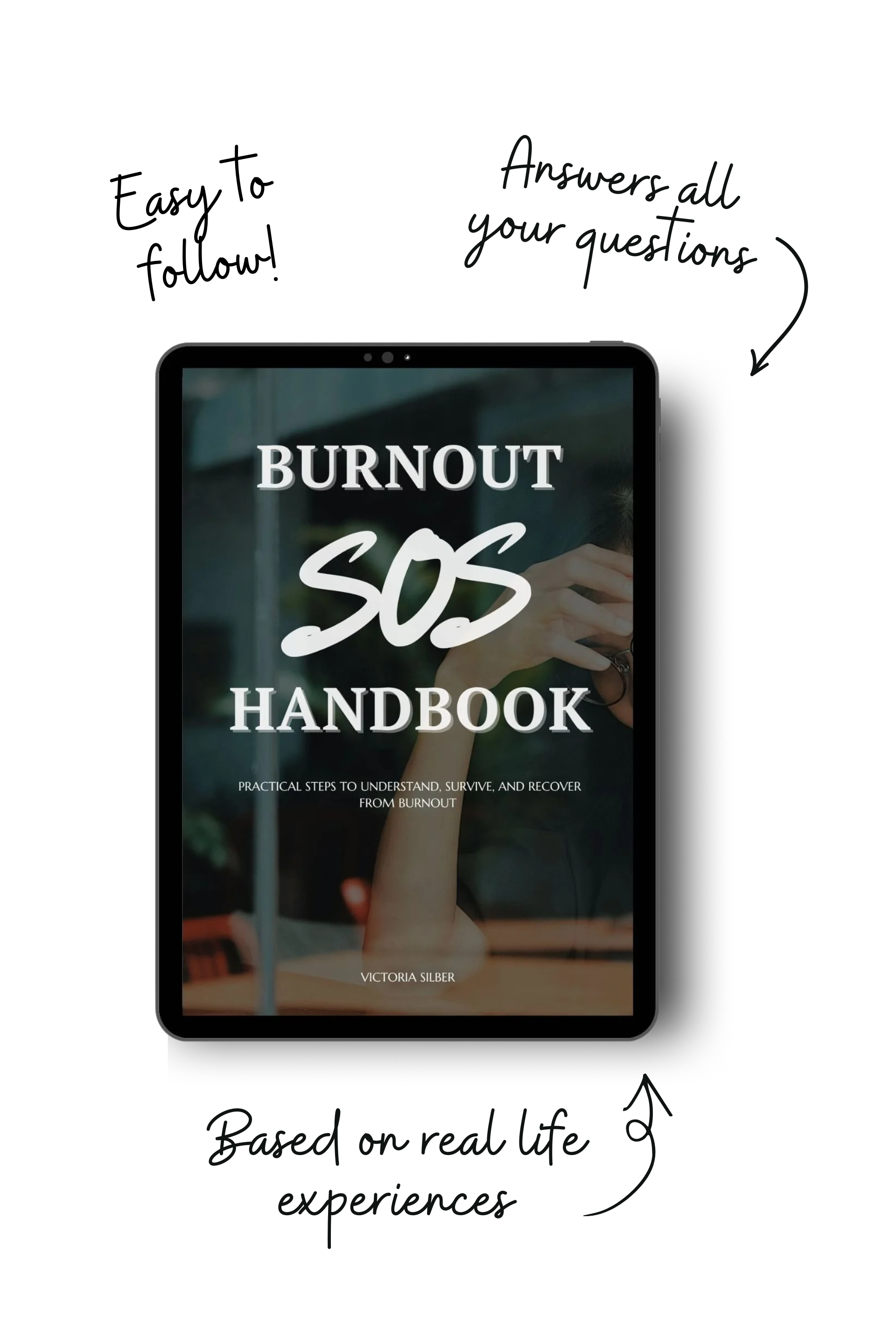
Burnout SOS Handbook: Practical steps to understand, survive, and recover from your burnout. Easy to follow - just right for a brain-fogged head. Start your healing today!
The Fun Habit: “Choose your own adventure” in the life you have now
Book “The Fun Habit” makes an important clarification: “choose your own adventure” does not mean doing something radical.
It means living life intentionally, starting with a conscious decision to adopt a bias toward fun each day, in the life you have now.
That is the key for burnout recovery.
A daily micro-decision that says: I will not postpone aliveness until I am fully recovered.
That is what makes it a habit.
How to apply this in burnout recovery (without turning it into another task)
Here is the executive-friendly version.
1) Redefine fun as “low-cost aliveness”
If fun feels too loaded, define it differently.
Fun can be:
Lightness
Curiosity
Play
Novelty
A small moment of “I like being alive”
The point is nervous system relief.
2) Stop outsourcing fun to the internet
If you are fun-starved, your feed will look like food.
But it is not nourishment.
Try a simple rule for two weeks:
No scrolling as a reward
No “watching other people live” as decompression
Replace it with one small active choice:
A short walk with a specific playlist
A café visit with a notebook
A silly show that actually makes you laugh
Ten minutes learning something useless and interesting
3) Build a “Fun List” that respects burnout capacity
Most fun lists are unrealistic.
Make three lists instead:
2-minute fun: one song, one meme thread, one stretch, one small joke with your kid
20-minute fun: a bath, a walk, a chapter of fiction, a simple sketch
2-hour fun: a museum, a long lunch, a slow movie, a day trip
When you are depleted, you do not need options. You need pre-decisions.
4) Make fun measurable (so your executive brain stops resisting)
If you want buy-in from your own mind, track it like an experiment.
For 14 days, rate:
Stress level (1–10)
Mental clarity (1–10)
Sleep quality (1–10)
Fun moments (count)
You are not trying to be cheerful.
You are trying to see whether fun changes your baseline.
5) Use fun as a bridge back to identity
Fun helps humans develop social and motor skills, test boundaries, and define themselves in relation to the world.
Burnout often erases identity: You stop knowing what you like.
Fun is a way back.
Not through deep analysis.
Through small experiences that answer:
What do I enjoy?
What makes me laugh?
What feels light?
What feels like me?
6) Protect fun from optimization
High performers ruin fun by optimizing it.
But if you turn fun into a KPI, it dies.
Use a boundary:
Fun must be easy
Fun must not require a perfect setup
Fun must not create a hangover (financial, social, physical)
Fun should restore you, not cost you.
What this looks like in real life (executive version)
A “Fun Habit” can be boring on purpose.
You take a different route home because it has trees.
You eat the same meal, but on a balcony with a view.
You buy one absurdly good pen and write one page.
You send one voice note to a friend who makes you laugh.
You watch one comedy clip and let yourself actually laugh.
None of these fixes burnout alone, but it changes the emotional climate in which your recovery happens inside.
And that matters.
If fun feels impossible, start with neutrality
Sometimes the system is too shut down for fun.
If that is where you are, do not force joy.
Start with neutral pleasure:
Warm shower
Clean sheets
A quiet café
Sunlight on skin
A simple, predictable routine
Then let fun return later.
The goal is to restore capacity.
The bottom line
Enjoyment is often mischaracterized as trivial or incompatible with serious responsibility.
In practice, it functions as a mechanism for nervous system regulation, stress modulation, and the maintenance of long-term vitality.
During burnout recovery, additional pressure or self-optimization rarely produces meaningful improvement. What is typically required is a gradual restoration of aliveness. This does not depend on dramatic lifestyle changes or reinvention.
It emerges from consistent, low-friction choices that favor activities capable of restoring engagement and physiological ease.
FAQ
Is fun really important if I am exhausted and overwhelmed?
Yes, but it must match your capacity. In burnout, fun should be low-effort and restorative. Start with 2-minute options and build from there.
What if fun makes me feel guilty because I am behind on work?
That guilt is often a symptom of a productivity-only identity. Treat fun as recovery infrastructure, not a reward. It supports better decisions and more stable output.
I do not know what I enjoy anymore. What do I do?
That is common in burnout. Use tiny experiments: one song, one café, one short walk, one chapter of fiction. Track what creates even a small sense of lightness.
Is scrolling social media a form of fun?
It can be entertainment, but the pages you shared point out a real risk: outsourcing fun to watching other people live. If you feel more drained after scrolling, it is not restorative.
How do I make this practical with kids and a full schedule?
Use “embedded fun”: micro-moments inside what already exists. A silly game with your kids, a playlist during chores, a short walk, a small ritual. The habit is the decision, not the size.
Learn More About Burnout Recovery